
Wa Kanday Gooro! Bringing Accessible Health Education to Zarma-Speaking Communities
Marc Greene (Chief Executive
Canopi Foundation & Education Saves Lives) with Zarina Douglas-Sori, Chief Executive, Good Neighbours UK


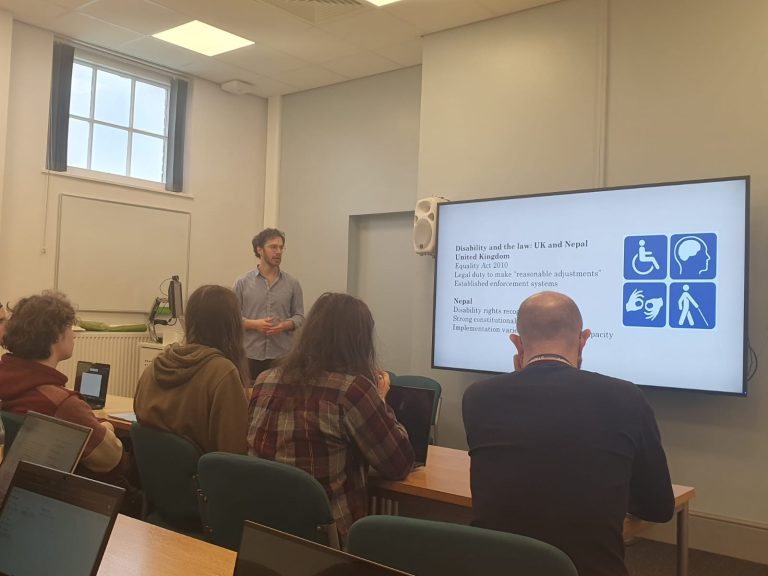
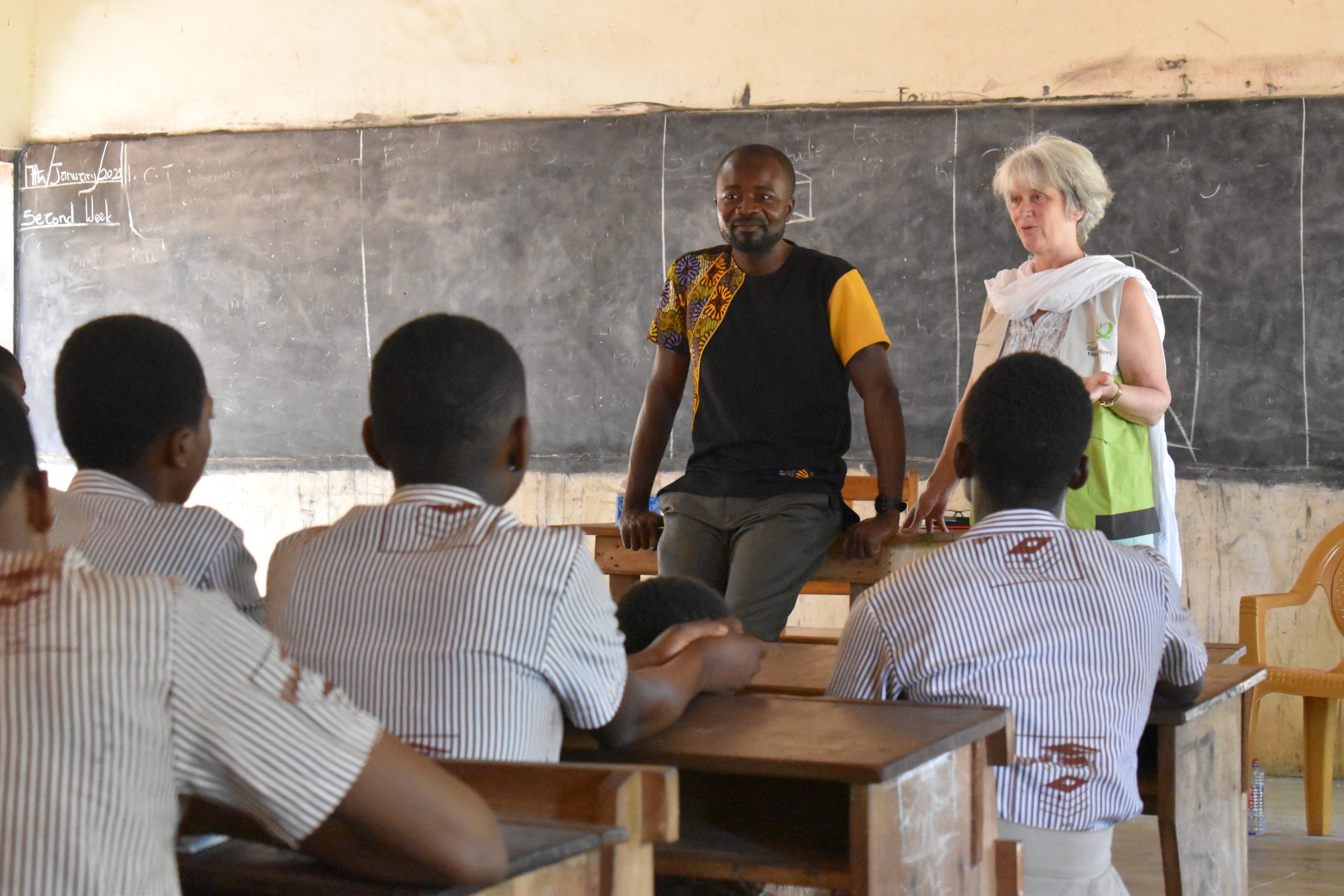
James Gold from Good Neighbours UK (GNUK) recently delivered a guest lecture at York St John University, as part of the first-year Sociology module, Identities. Drawing on his dissertation research, he presented a case study on inclusive education in Nepal, using it to explore how disability, poverty, and access to services shape real opportunities for participation. The session focused on moving beyond policy definitions of “inclusion” to consider what inclusion actually looks like in people’s everyday lives, particularly in contexts where infrastructure and resources are limited.
At the centre of the discussion was GNUK’s ongoing work in Banrdiya village in Nepal in collaboration with GNI Nepal, where just 28.9% of school-aged children with disabilities were enrolled in school as recently as 2022. Inaccessible buildings are one barrier, but social stigma, limited learning materials, and economic pressure on families all play a part too.
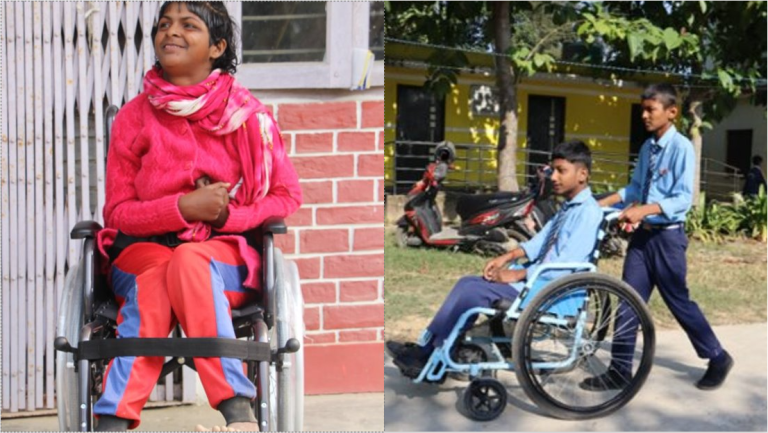
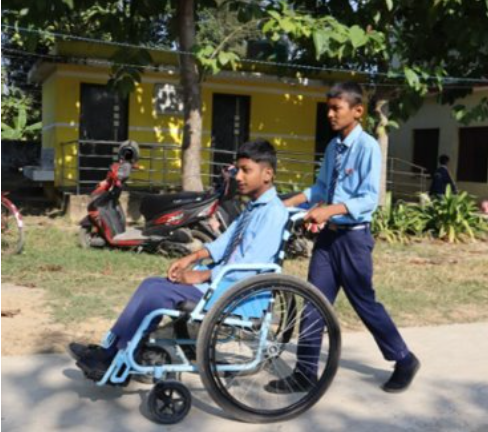
GNUK’s project tackles these barriers together across 15 model schools. The results so far tell a clear story. Sixty-three children with disabilities have each received assistive devices including wheelchairs, hearing aids, and walkers. This is giving them the means to access school independently for the first time.
The difference this makes is already visible. At Dharma Jyoti Secondary School, a boy named Amrit can now move independently across campus, use the facilities, and learn alongside teachers and classmates who understand his needs. His headteacher put it simply: “Our school truly feels inclusive now.” Amrit’s own words go further: “Even with my disability, I will become an inspirational person one day.”
But inclusion is not only about getting through the school gates. For some children, the road back to education is far longer and far harder.Bipana Chaudhary, 18, was forced to drop out of school in Grade 9. Her physical disability made the journey difficult, and with both parents working as daily wage labourers, there was nobody to accompany her. “From that day,” she recalls, “my life turned into darkness.” In the years that followed, she married, was rejected by her husband’s family because of her disability, and now raises her four-year-old son alone.
When GNUK’s partner organisations reached her by visiting her home, assessing her needs, and providing her with a tricycle assistive device. We kept going back. We encouraged her. And eventually, Bipana walked back through the school gates. Today she attends regularly, completes her homework on time, and has a plan. “I want to study hard, get a good job, and secure a bright future for my son. I also want to work for people like me.” Her parents, who once assumed her disability meant limited possibilities, now care for her son while she is in class. “We realise,” they said, “that she can achieve anything.”
Back in the lecture hall at York St.John, James set students a challenge for their assessments by asking them to think about how organisations can design education programmes that go beyond simply getting children through the door, and instead create lasting opportunities to learn, grow, and belong.
Stories like Bipana’s and Amrit’s suggest that with the right support, that kind of change is possible. It just has to be built by one ramp, one classroom, one second chance at a time.
For a room full of first year Sociology students, many of them encountering international development for the first time, the session offered something lectures rarely do: a direct line between the concepts on the page and the lives of people on the other side of the world.
The conversation that started in that lecture hall is one GNUK hopes to keep going with students, with universities, and with anyone willing to ask harder questions about what inclusion really means.
#lastingchange#CommunityLedChange #SDGs #goodneighbours #goodneighboursuk
Marc Greene (Chief Executive
Canopi Foundation & Education Saves Lives) with Zarina Douglas-Sori, Chief Executive, Good Neighbours UK


Copyright © 2026 Good Neighbours UK
Good Neighbours UK is a registered charity in England & Wales (No. 1191924) and a company limited by guarantee (No. 12118933)
Address: Priory Street Centre, 17 Priory Street, York, YO1 6ET
Disclaimer | Cookies | Privacy | Whistleblowing | Safeguarding